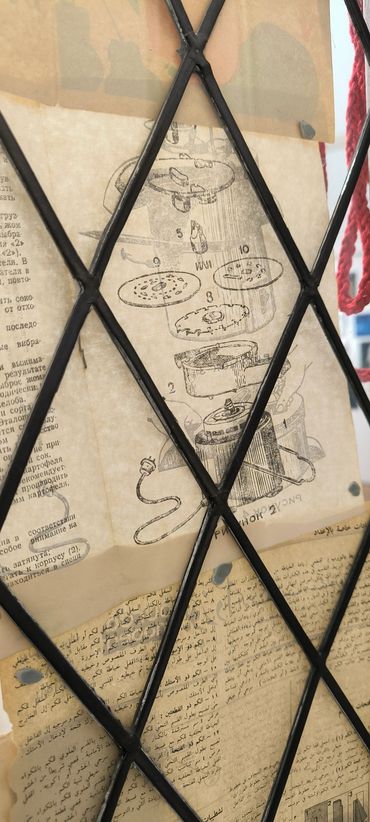
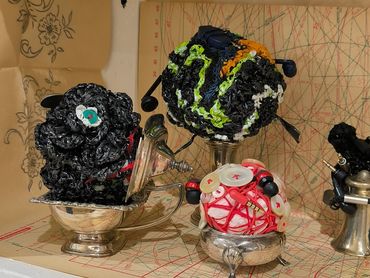
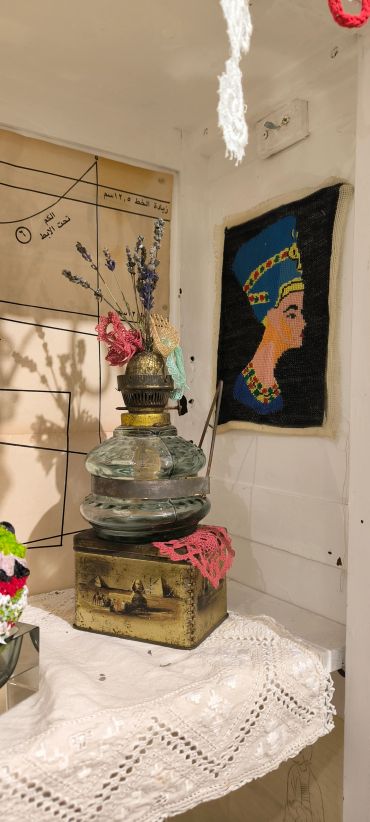
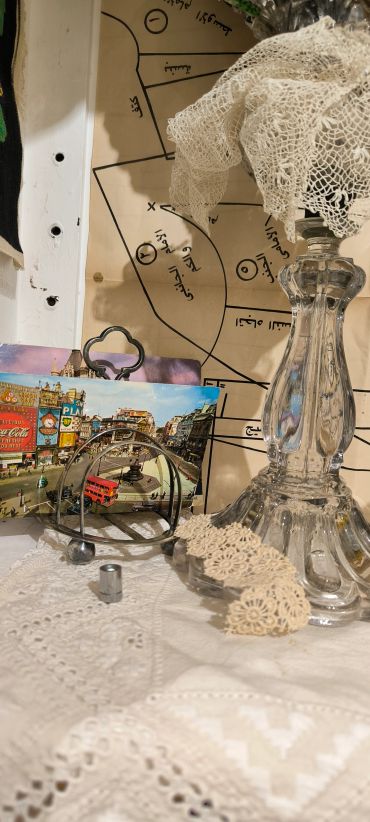
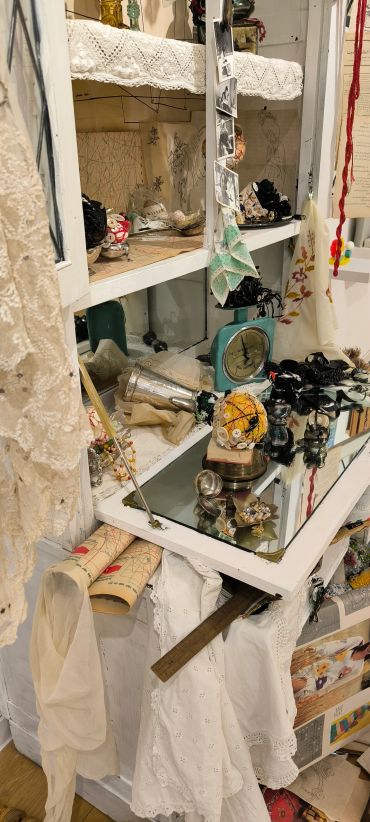
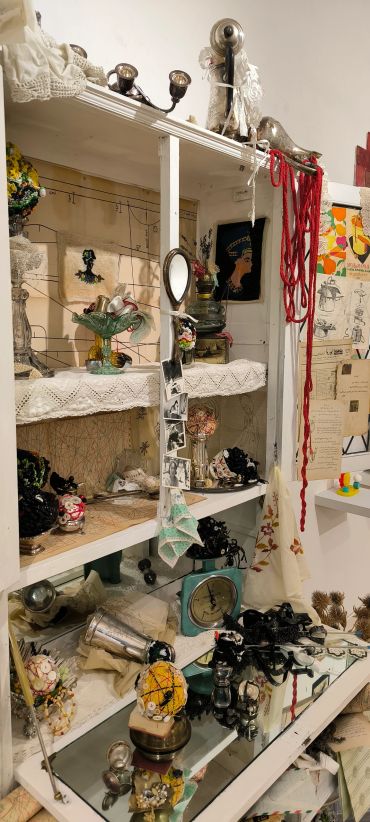
Installation/assemblage in TOD (The Open Dresser Gallery) part of Domestic Pleasures show with Sarah Cliff, Caroline Penn and joined by SVAF members of The Bridge Art School (2024/5) and other guests in this exhibition encompassing film, bookmaking, printmaking, architecture, made and found objects, textiles, drawing and painting.
Nonna Neana Hanim
Nonna: Italian for “Grandmother,” the name my daughters use for their Italian grandmother.
Neana: The word I used for my Egyptian grandmother growing up. Of Ottoman Turkish origin, it was widely used in Egypt (similar to “Nana” in English).
Hanim: My Egyptian grandmother’s first name. Unusual in itself, it is also a Turkish word meaning “Lady” or “Madam,” historically used as a title denoting royalty or high social standing in Turkey and Persia.
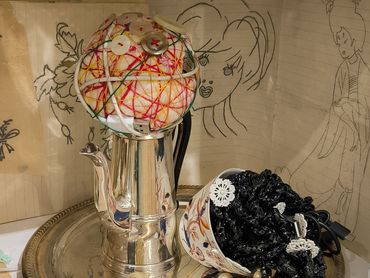
The dresser—often overlooked as a vessel of the private and practical—is reimagined here as a stage for reflection. Objects, textures, and fragments assembled within it speak of memory, intimacy, and the quiet rituals of domestic life. As part of the group show Domestic Pleasures, the installation draws attention to the unseen narratives and layered histories embedded in the domestic sphere.
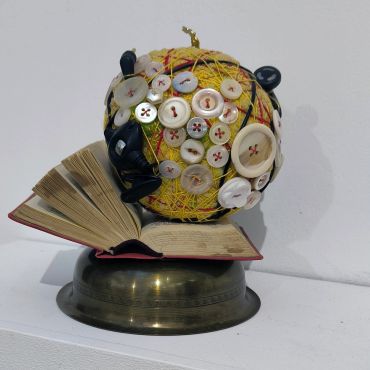
Reusing and repurposing my own work, with objects once belonged to my Egyptian grandmother and aunt: cherished possessions that adorned mantles, tables, and dresser tops. Threads, textiles, and buttons once part of elegant garments, tea sets and dinner services once central to family gatherings—today these no longer fit the rhythms of modern life. They stand as witnesses, not only to their lives, but to broader social change. Once everyday items, they now stand as relics of another era, bearing witness to both personal histories and wider social change.
Discarded videotapes, family photographs, and advertisements urging women toward domesticity combine with Burda magazines (my aunt was an avid sewer) to form a time capsule. Together, they reflect a past when women’s place was assumed to be the home, while in reality they were also educators, financially managing their homes, and shapers of their children’s futures.